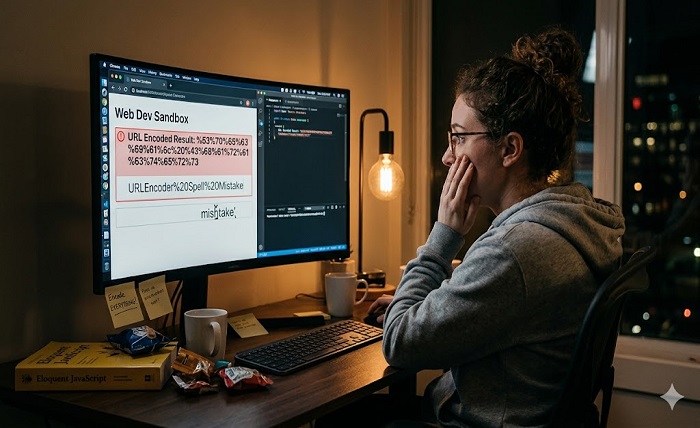
The concept of url decoder spellmistake refers to errors that occur when a URL decoding system misinterprets encoded characters due to spelling, formatting, or encoding inconsistencies. A url decoder spellmistake typically appears when special characters like %20, %3A, or %2F are incorrectly processed or when the decoding function expects a different format than what is provided. In modern web systems, a url decoder spellmistake can lead to broken links, incorrect page routing, or even failed API requests.
A url decoder spellmistake often happens during data transmission between browsers and servers where encoding rules are not strictly followed. Developers encounter a url decoder spellmistake when input strings are not properly sanitized before decoding. This issue becomes more common in multilingual websites where character sets vary, making a url decoder spellmistake more likely if UTF-8 handling is inconsistent.
Ultimately, understanding a url decoder spellmistake is essential for maintaining smooth web navigation and ensuring that encoded URLs are correctly interpreted across systems.
Common Causes Behind URL Decoder Spellmistake in Web Systems
A major reason for a url decoder spellmistake is improper encoding before decoding occurs. When URLs are not correctly encoded, the decoding engine produces incorrect output, resulting in a url decoder spellmistake that breaks application functionality. Another cause of a url decoder spellmistake is manual editing of encoded URLs, which introduces unintended characters.
Server-side misconfigurations also lead to a url decoder spellmistake, especially when frameworks expect a different encoding standard. For example, mixing UTF-8 and ASCII formats can easily trigger a url decoder spellmistake. Additionally, copy-paste operations from external sources frequently introduce hidden characters that cause a url decoder spellmistake without the developer realizing it.
In some cases, a url decoder spellmistake occurs due to outdated libraries that fail to support modern encoding rules. These legacy systems struggle with special characters, increasing the chances of a url decoder spellmistake during runtime.
How URL Decoder Spellmistake Impacts Website Performance and SEO
A url decoder spellmistake can significantly affect website performance by breaking internal links and redirect chains. When search engines encounter a url decoder spellmistake, they may fail to index certain pages, reducing overall visibility. This makes a url decoder spellmistake a critical issue for SEO professionals.
User experience also suffers due to a url decoder spellmistake, as visitors may land on 404 error pages or incorrect destinations. Such disruptions caused by a url decoder spellmistake increase bounce rates and decrease engagement metrics. Over time, repeated instances of a url decoder spellmistake can damage a site’s credibility in search engine rankings.
From a technical SEO perspective, a url decoder spellmistake disrupts crawl efficiency. Search bots waste resources trying to interpret broken URLs, which results in poor indexing and lower ranking potential due to a persistent url decoder spellmistake.
Tools Used to Detect URL Decoder Spellmistake in Development
Several tools help developers identify a url decoder spellmistake early in the development cycle. Browser developer tools often highlight malformed URLs, making it easier to detect a url decoder spellmistake during testing. Additionally, logging systems can track decoding errors and reveal patterns associated with a url decoder spellmistake.
Online URL encoding/decoding tools are also useful for identifying a url decoder spellmistake by allowing developers to manually test encoded strings. These tools simulate how browsers interpret URLs and help isolate the root cause of a url decoder spellmistake.
Advanced debugging frameworks integrated into IDEs can further pinpoint a url decoder spellmistake by analyzing stack traces and encoding mismatches. This allows developers to resolve a url decoder spellmistake before deployment, reducing production errors.
Step-by-Step Fix for URL Decoder Spellmistake Errors
To fix a url decoder spellmistake, the first step is verifying that all URLs are properly encoded before decoding. Ensuring consistent encoding standards helps eliminate a url decoder spellmistake at the source. Developers should also sanitize input data to prevent unexpected characters from triggering a url decoder spellmistake.
The second step involves reviewing server configurations. A mismatch in encoding settings often causes a url decoder spellmistake, so aligning UTF-8 standards across systems is essential. Testing APIs and endpoints also helps identify where a url decoder spellmistake originates.
Finally, updating libraries and frameworks reduces compatibility issues that lead to a url decoder spellmistake. Modern tools are designed to handle complex encoding scenarios, minimizing the risk of a url decoder spellmistake in production environments.
Best Practices to Prevent URL Decoder Spellmistake in Future Projects
Preventing a url decoder spellmistake starts with enforcing strict encoding rules across all development stages. Developers should always encode URLs before transmission to avoid a url decoder spellmistake. Standardizing UTF-8 across systems also reduces the chances of a url decoder spellmistake occurring.
Another best practice is implementing automated testing for URL handling. These tests can detect a url decoder spellmistake early and prevent deployment of faulty code. Code reviews also help catch potential url decoder spellmistake issues before they reach production.
Using reliable frameworks and avoiding outdated libraries further minimizes the risk of a url decoder spellmistake. Consistency in coding practices ensures that a url decoder spellmistake does not reappear in future updates.
Real-World Examples of URL Decoder Spellmistake in Applications
In real-world applications, a url decoder spellmistake often appears in e-commerce platforms where product URLs contain special characters. A url decoder spellmistake in such systems can prevent customers from accessing product pages, resulting in lost sales.
Social media platforms also experience a url decoder spellmistake when shared links are improperly encoded. This leads to broken previews or incorrect redirects caused by a url decoder spellmistake. Similarly, API-driven applications frequently encounter a url decoder spellmistake when data payloads are not properly formatted.
These examples show that a url decoder spellmistake is not just a technical issue but also a business-critical problem that affects user engagement and revenue.
Future of URL Encoding and Eliminating URL Decoder Spellmistake
The future of web development aims to eliminate the url decoder spellmistake through smarter encoding standards and automated systems. Modern frameworks are already reducing the likelihood of a url decoder spellmistake by handling encoding automatically.
Artificial intelligence-based debugging tools are also emerging to detect a url decoder spellmistake before it impacts production systems. These tools analyze patterns and predict where a url decoder spellmistake might occur.
As web technologies evolve, the frequency of a url decoder spellmistake is expected to decrease significantly, making digital systems more reliable and efficient overall.
Conclusion
In conclusion, a url decoder spellmistake is a common yet critical issue in web development that affects performance, SEO, and user experience. By understanding its causes and applying proper encoding practices, a url decoder spellmistake can be effectively prevented. Developers who prioritize clean URL handling will significantly reduce the risks associated with a url decoder spellmistake and ensure smoother digital operations.
FAQs
1. What is a URL decoder spellmistake?
A url decoder spellmistake is an error that occurs when encoded URLs are incorrectly interpreted due to formatting or spelling issues in decoding systems.
2. What causes URL decoder spellmistake errors?
A url decoder spellmistake is usually caused by improper encoding, server misconfiguration, or outdated decoding libraries.
3. How does URL decoder spellmistake affect SEO?
A url decoder spellmistake can break links and prevent search engines from indexing pages, negatively impacting SEO rankings.
4. Can tools detect URL decoder spellmistake issues?
Yes, a url decoder spellmistake can be detected using browser tools, debugging software, and online URL encoding testers.
5. How can I prevent URL decoder spellmistake in my project?
A url decoder spellmistake can be prevented by enforcing proper encoding, using UTF-8 standards, and regularly testing URL structures.